

Proper ADAS calibration execution is no longer optional.
When OEM procedures call for calibration, it is part of repairing the vehicle correctly.
Today’s vehicles rely on cameras, radar, sensors, and advanced driver assistance systems to support features like forward collision warning, automatic emergency braking, lane keeping, blind spot monitoring, adaptive cruise control, parking assist, and surround view systems.
If those systems are not properly calibrated after a repair, the vehicle may not perform as intended.
That creates a serious risk for the customer.
It also creates risk for the shop.
A missed or improperly documented calibration can raise questions about whether the vehicle was repaired safely, whether OEM procedures were followed, whether the customer was properly informed, and whether the repair business fulfilled its responsibility before returning the vehicle.
For body shops, ADAS providers, and repair businesses, the issue is no longer just whether a calibration was completed.
The issue is whether the need for calibration was identified, approved, completed, documented, and communicated before the vehicle left the repair process.
That question is becoming harder for shops to ignore.
ADAS calibration risk is no longer theoretical. It is already showing up in lawsuits, legislation, attorney conversations, insurance scrutiny, and repair documentation expectations.
Industry reporting referenced in the ADAS legislation notes shows lawsuits dealing with ADAS calibration rose from 3 in 2018 to 61 in 2024. Those same notes reference that lawsuits or settlements can cost shops $200,000 to $1 million or more when required ADAS calibrations are skipped, missed, or poorly documented.
For body shops, that should be a serious wake up call.
The question is no longer, “Do we perform calibrations?”
The better question is, “Can we prove what was required, what was recommended, what was approved, what was completed, what was declined, and what documentation supported the decision?”
Because when something goes wrong, the repair file may become the shop’s first line of defense.
ADAS recommendations are happening at serious volume
This is not a rare repair scenario anymore.
In 2025, adasThink generated hundreds of thousands of calibration recommendations across common ADAS systems, including 590,000 Front Radar recommendations, 469,000 Blind Spot Radar recommendations, 325,000 Front Camera recommendations, 231,000 360 Surround View recommendations, and 111,000 Rear Parking Sensor recommendations.
The volume matters.
It shows that ADAS related work is not limited to luxury vehicles or unusual repair situations. Calibration recommendations are showing up across everyday repair operations, which means body shops need a process that helps them identify, document, communicate, and track ADAS related work before the vehicle leaves the shop.

Legislation is catching up to vehicle complexity
ADAS calibration is also becoming a bigger compliance conversation.
Several states have passed or considered ADAS related disclosure laws, especially around glass repair and windshield replacement. Many of these laws focus on making sure consumers are informed when a vehicle has ADAS, whether calibration is recommended, whether calibration was completed successfully, and whether the consumer needs to visit a qualified specialist.
While much of the current legislation focuses on glass, the broader trend is clear.
- Vehicles are more complex.
- Safety systems are more connected.
- Documentation expectations are increasing.
- Repair businesses are being asked to prove more.
For body shops, this should be a wake up call.
ADAS calibration is moving from a best practice conversation into a liability and documentation conversation.
Legal exposure is becoming harder to ignore
The legal conversation around ADAS calibration is growing.
Industry conferences, legal commentary, and repair discussions continue to point to the same issue: when a repaired vehicle is involved in a future accident, the repair documentation may come under scrutiny.
That can include OEM procedure documentation, scan records, calibration reports, technician notes, sublet records, customer communication, and proof that required procedures were completed.
If calibration documentation is missing, the shop may have a harder time showing that the vehicle was repaired safely.
One of the clearest reminders of this risk is a major collision repair case involving a collision center in Dallas. While the case was not specifically an ADAS calibration case, it became a safe repair warning for the collision industry.
In that case, a vehicle had previously been repaired after hail damage. During the repair, the shop replaced the steel roof using adhesive instead of following the OEM repair procedure. The vehicle was later involved in a serious crash, and the roof separated during the collision.
The jury found the shop responsible for a significant portion of the liability, with the shop ordered to pay $31.5 million in damages.
The lesson for the industry was clear: failing to follow OEM repair procedures can create serious safety, legal, and financial consequences.
That lesson now applies directly to the ADAS conversation.
Today’s vehicles depend on properly functioning cameras, radar, sensors, and control systems. If OEM procedures call for calibration after a repair, that calibration is part of restoring the vehicle properly. If it is missed, skipped, or poorly documented, the shop may be left trying to explain why the vehicle was returned without a clear record of the required work.
The message for body shops is simple:
If OEM procedures require calibration, the repair file needs to show what happened.
ADAS litigation is moving from rare to relevant
For years, ADAS calibration risk felt like an edge case.
That is changing.
Industry notes show that lawsuits involving ADAS calibration rose from 3 in 2018 to 61 in 2024. That kind of increase matters because it signals a broader shift in how attorneys, insurers, consumers, and repair businesses are starting to view calibration work.
Missed calibrations are no longer being treated as small process gaps. They are being viewed as potential safety failures.
And once a repaired vehicle is involved in a future accident, the repair file may be pulled apart.
- Was the vehicle ADAS equipped?
- Were OEM procedures reviewed?
- Was calibration required?
- Was it recommended?
- Was it approved?
- Was it completed successfully?
- Was it declined?
- Was the customer informed?
- Was the calibration report attached to the job?
If the documentation is missing, unclear, or disconnected from the repair file, the shop may be left trying to defend a repair without the record to support it.
That is what makes ADAS calibration so different from a normal line item. The work matters, but the record of the work matters too.
Body shops are responsible for the vehicle they return
When a customer gets their vehicle back, they expect it to be safe.
That includes more than visible damage.
If a repair affects ADAS sensors, cameras, radar, glass, mirrors, bumpers, grilles, steering, suspension, or related systems, the shop needs to understand whether calibration is required. Just as importantly, the repair file needs to support that decision.
That responsibility does not disappear when calibration work is sent to a third party.
Even when an ADAS provider performs the calibration, the body shop may still need to show that the provider was qualified, the work was completed, and the documentation was included in the final repair record.
That is where the risk can become easy to miss.
A vehicle can look repaired.
The panels can line up.
The paint can match.
The customer can drive away happy.
But if a required ADAS calibration was missed, skipped, declined without documentation, or completed without a clear record, the repair file may still be vulnerable.
And in many cases, shops may not realize there is a documentation problem until a customer, insurer, attorney, or repair partner starts asking questions.
That is what makes this issue so urgent. ADAS risk often lives in the paperwork before it ever shows up on the road.
It also makes ADAS providers an important part of the safe repair process.
A strong ADAS provider can help body shops identify required calibrations, complete the work properly, provide supporting documentation, and reduce uncertainty around safety, liability, and payment.
The stronger the process, the easier it becomes to show what was required, what was completed, and how the repair was supported.
Documentation protects the repair and the business
In ADAS related repairs, documentation is not just administrative work. It is part of the repair record.
A strong repair file should help show:
- What was identified
- What was recommended
- What was approved
- What was declined
- What was completed
- What still needed follow up
- What was included on the estimate or invoice
That record matters if there is ever a question from the customer, insurer, body shop, dealer, or legal team.
Without documentation, it can become one person’s word against another’s.
With documentation, the business has a clearer record of the work, recommendations, approvals, and decisions made along the way.
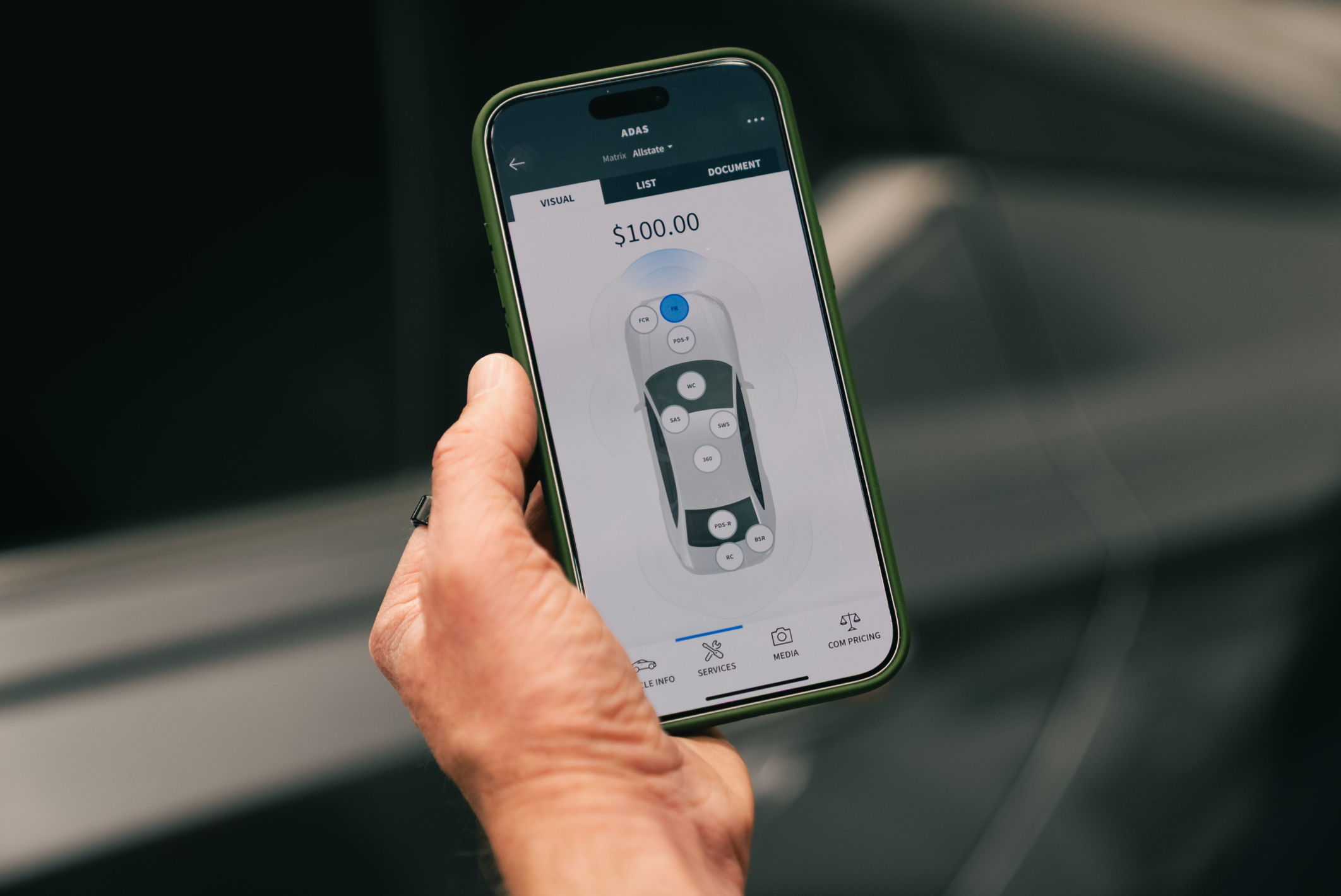
Where Mobile Tech RX fits
Mobile Tech RX helps ADAS providers and repair businesses keep the repair process organized from estimate to invoice.
With Mobile Tech RX ADAS Intelligence powered by adasThink, businesses can better identify required ADAS work, document recommendations, capture line items, organize photos and notes, track approvals, and keep invoices tied to the repair file.
That matters because ADAS related work needs to be visible.
If a calibration may be required, document it.
If a customer or insurer approves the work, track it.
If work is declined, record it.
If the calibration is completed, keep the documentation tied to the job.
The bottom line
Proper ADAS calibration is part of a safe and complete repair.
As ADAS systems become more common, body shops cannot afford to treat calibration as optional, unclear, or separate from the repair file.
The data shows calibration recommendations are happening at scale. Legislation shows the industry is paying closer attention. Legal commentary shows documentation is becoming harder to ignore.
This is the part that should get every shop owner’s attention.
ADAS calibration lawsuits reportedly increased from 3 in 2018 to 61 in 2024. Lawyers are already talking about ADAS liability. States are already passing disclosure laws. Insurers are already asking for stronger documentation. And repair files are already being scrutinized when something goes wrong.
The shops that take this seriously now will be better prepared to protect the customer, protect the repair, and protect the business.
The shops that wait may not realize the gap until someone else is reviewing their file.
For body shops, the risk is not just missing revenue.
It is returning a vehicle without the required calibration, without the right documentation, or without a clear record of what was recommended, approved, declined, completed, and invoiced.
That is where process matters.
Mobile Tech RX helps ADAS providers and repair businesses keep calibration related work connected to the job, from estimate to documentation to invoice.
Because when safety systems are involved, a proper repair needs a proper record.
Build a better workflow around ADAS related work.
Use Mobile Tech RX to document, estimate, track, and invoice with more confidence.